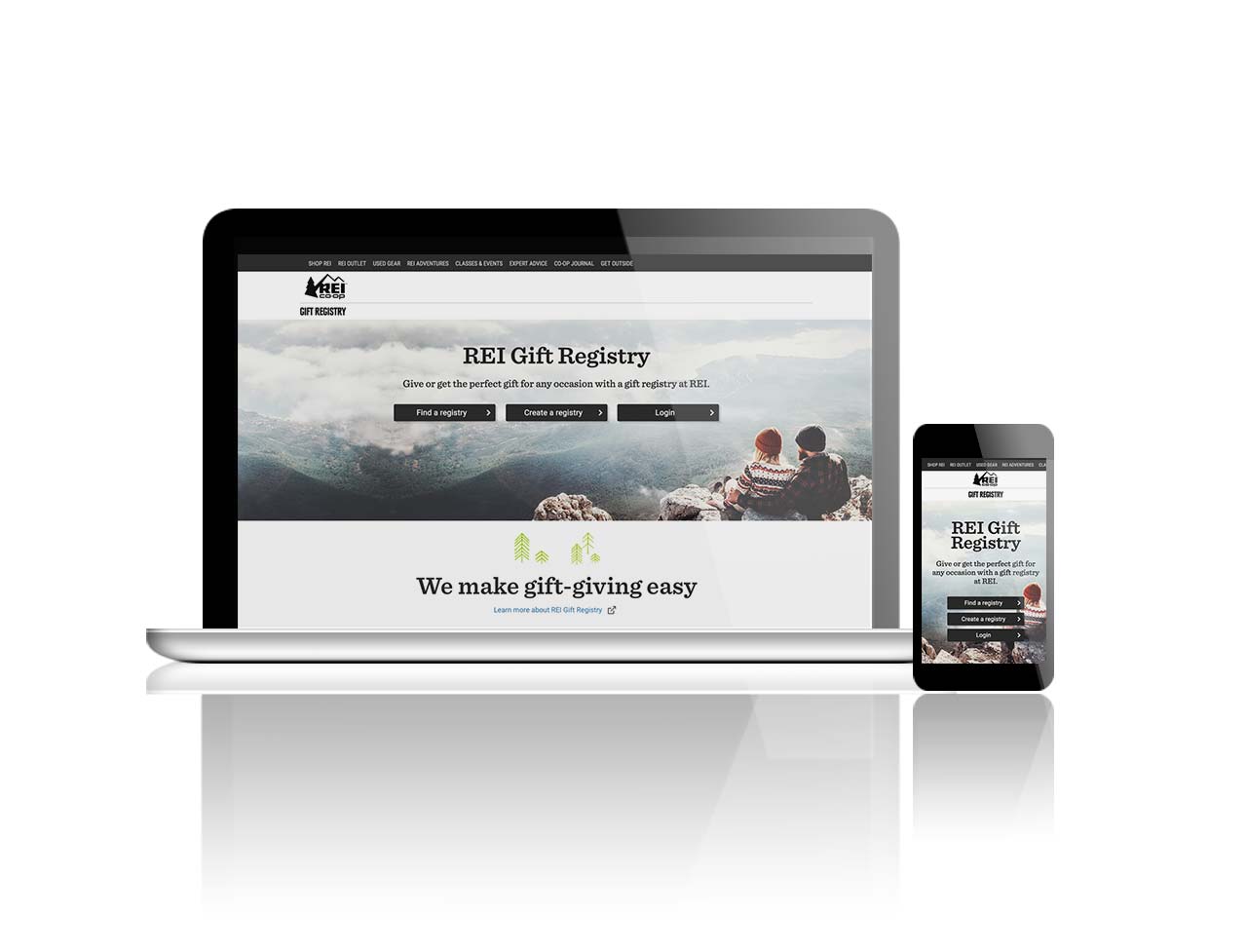
REI Gift Registry
REI was changing registry partners in 2019, and we had a narrow window to update the landing screen. Scope was limited. I led the effort and compiled a set of business opportunities and next steps for when the team had more bandwidth.
Company
REI
Responsibilities
Senior UX Lead; People Manager: UX/UI Designer, Strategist
Deliverables
Cedar-compliant UI updates; mobile usability improvements; Recommendations + Opportunities strategic roadmap document
Overview
REI was switching registry partners in 2019. This opened a narrow window to make real improvements to an experience that had been accumulating debt.
These types of transition are often treated as a pure backend migration. I reframed the window as a two-part opportunity and brought the design teams and stakeholders along with it.
A project that started as a quick onboarding flow while we transitioned services to a new registry partner turned into a refactor that would increase registry usage, shine a spotlight on our new experiences offerings, and help members live their best lives outdoors.
Objectives
- Treat a constrained partner-transition window as two workstreams: deliver immediate improvements within scope, and document a prioritized future roadmap that persists when bandwidth allows
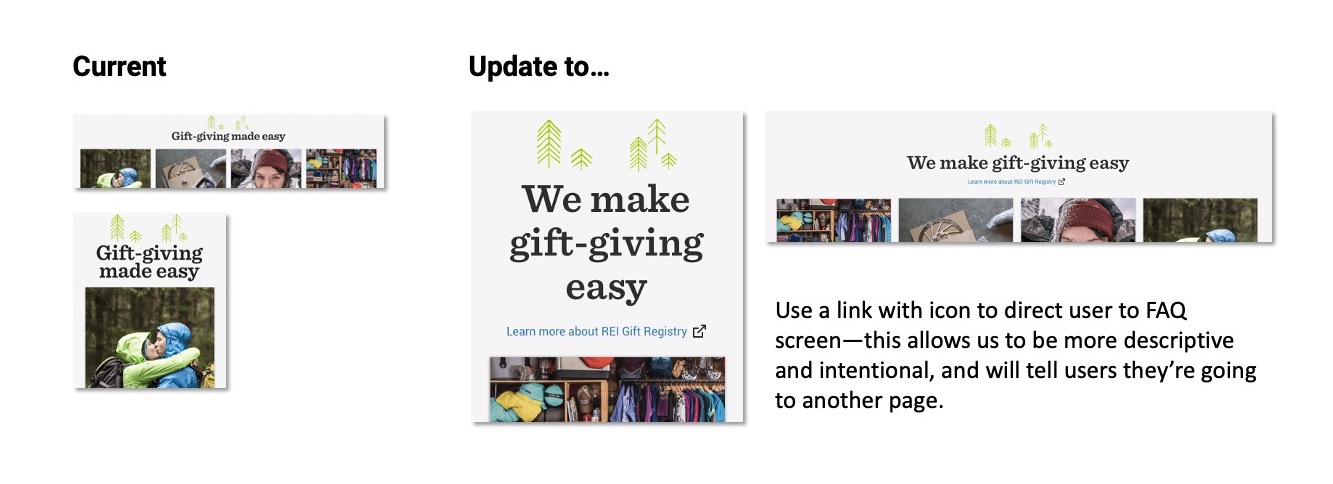
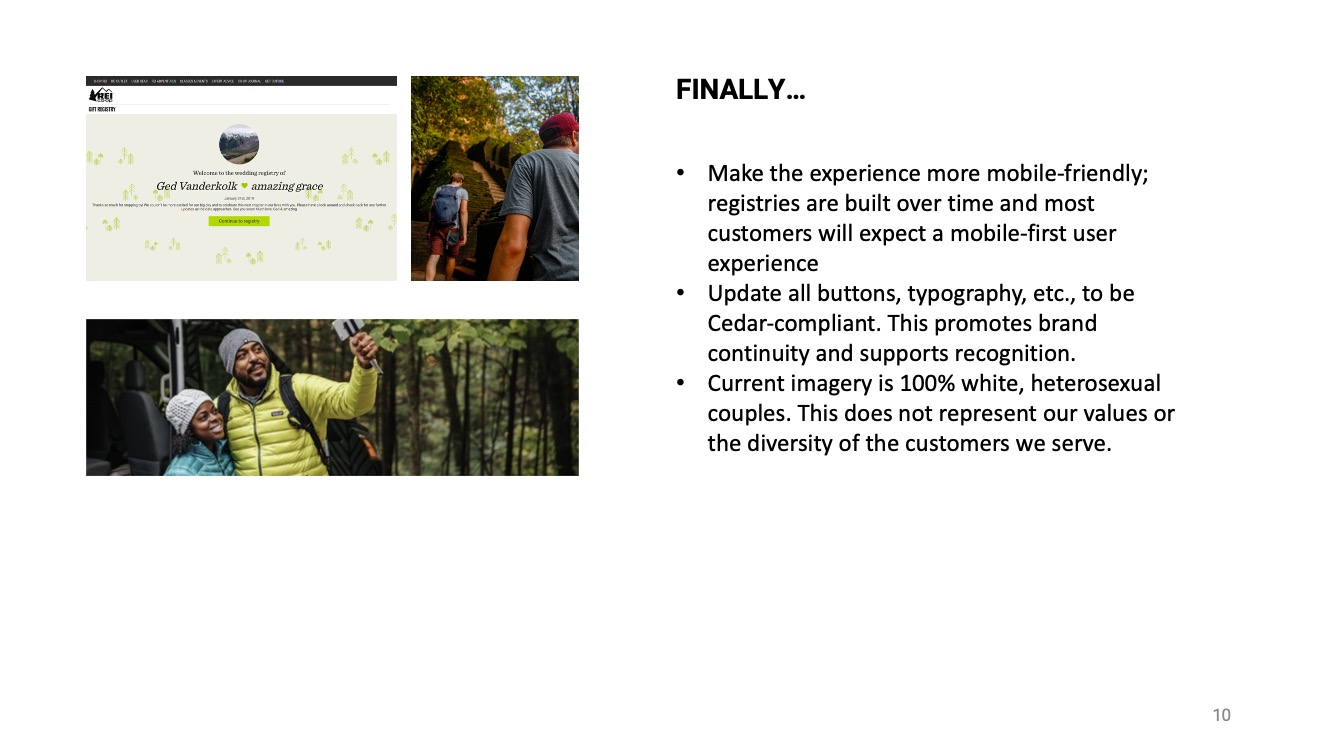
- Bring the gift registry into Cedar design system compliance and rei.com visual standards, closing a long-standing inconsistency
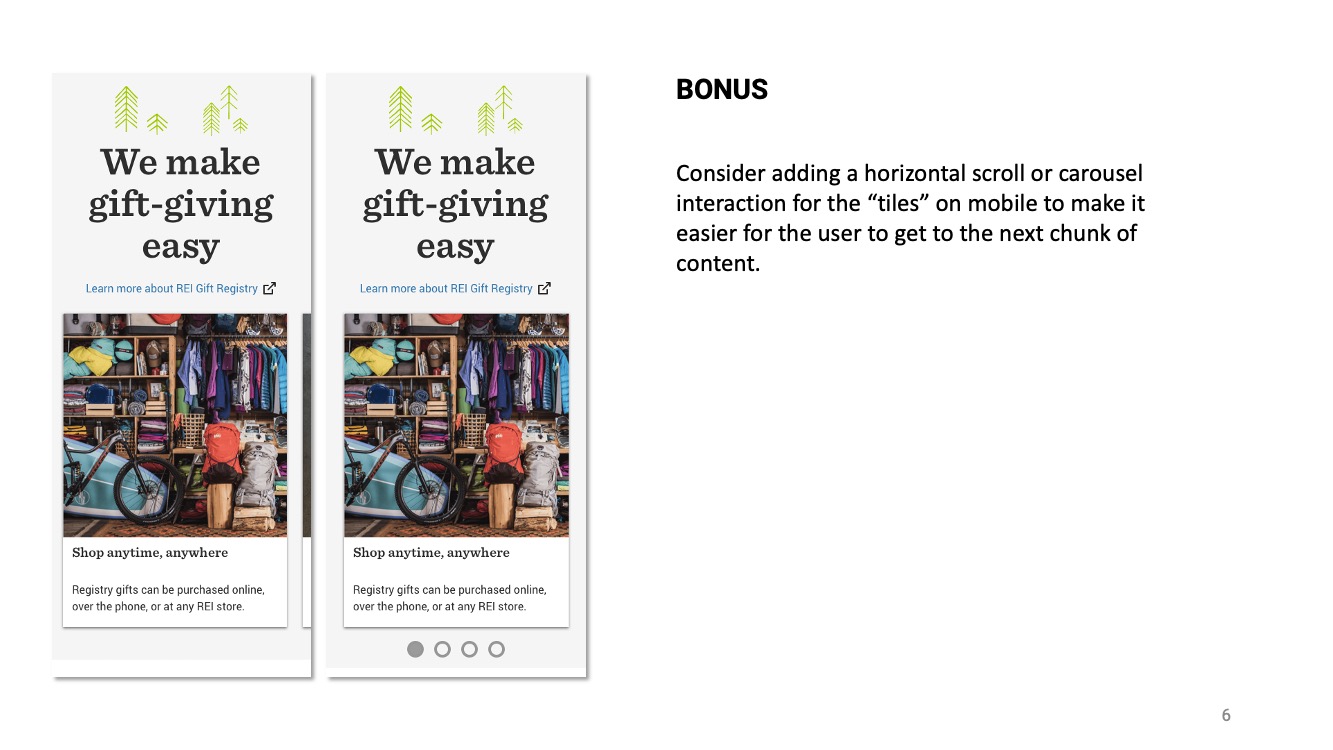
- Improve mobile usability beyond basic responsive design: touch targets, typography, and interaction patterns built for mobile-first behavior
- Surface REI's experiences offerings and the shift toward experience-based registries as a strategic product opportunity
The Details

This project came at an opportune time. Not only was the Co-op switching registry vendors, they were also growing their experiences offerings and releasing a new toolkit and brand guidelines.
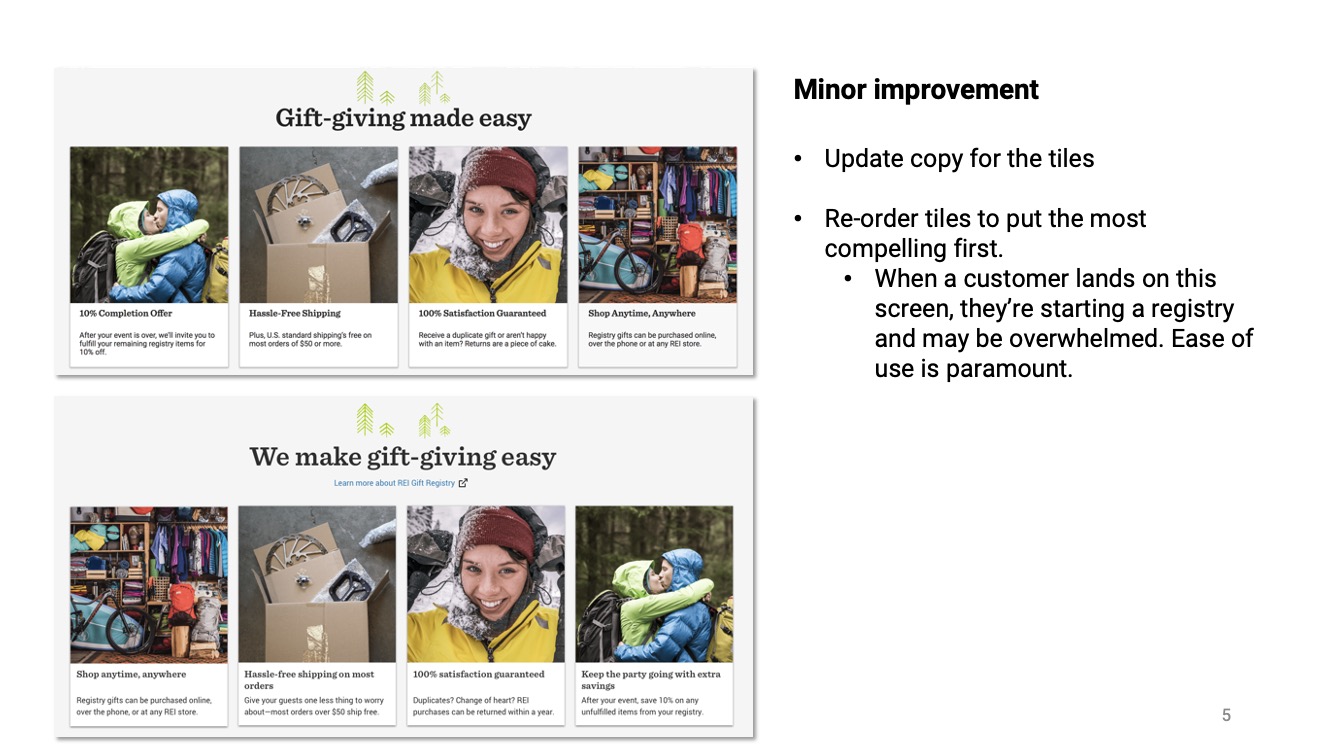
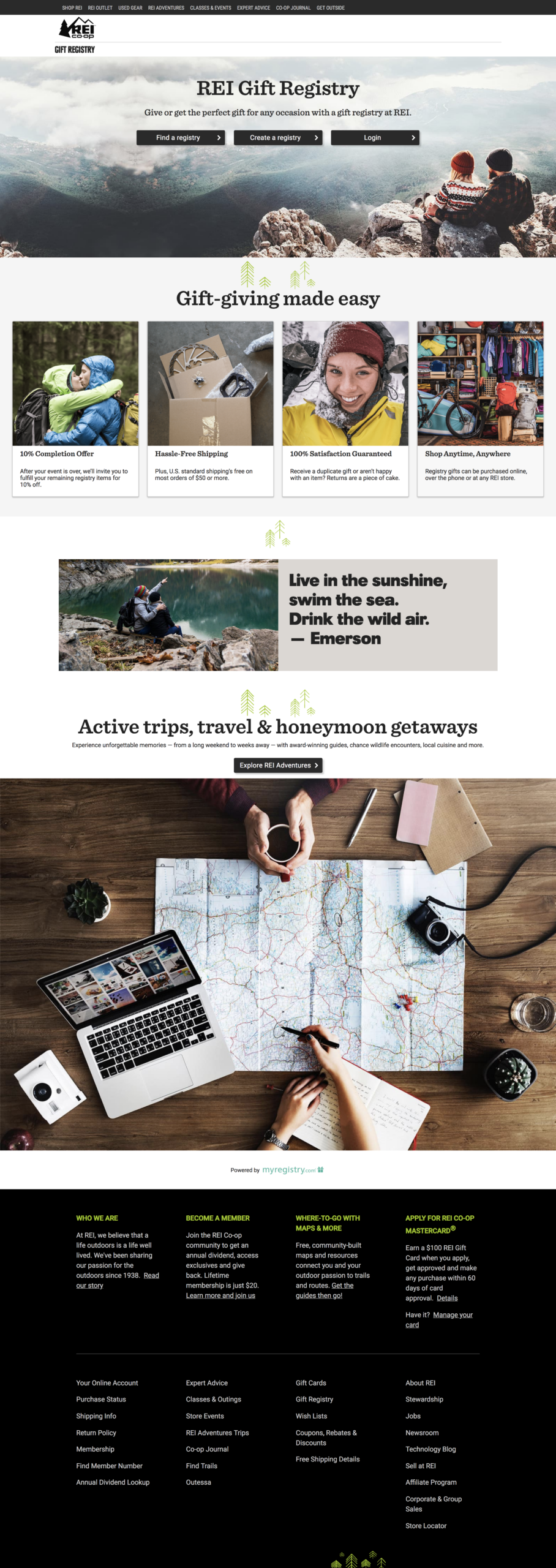
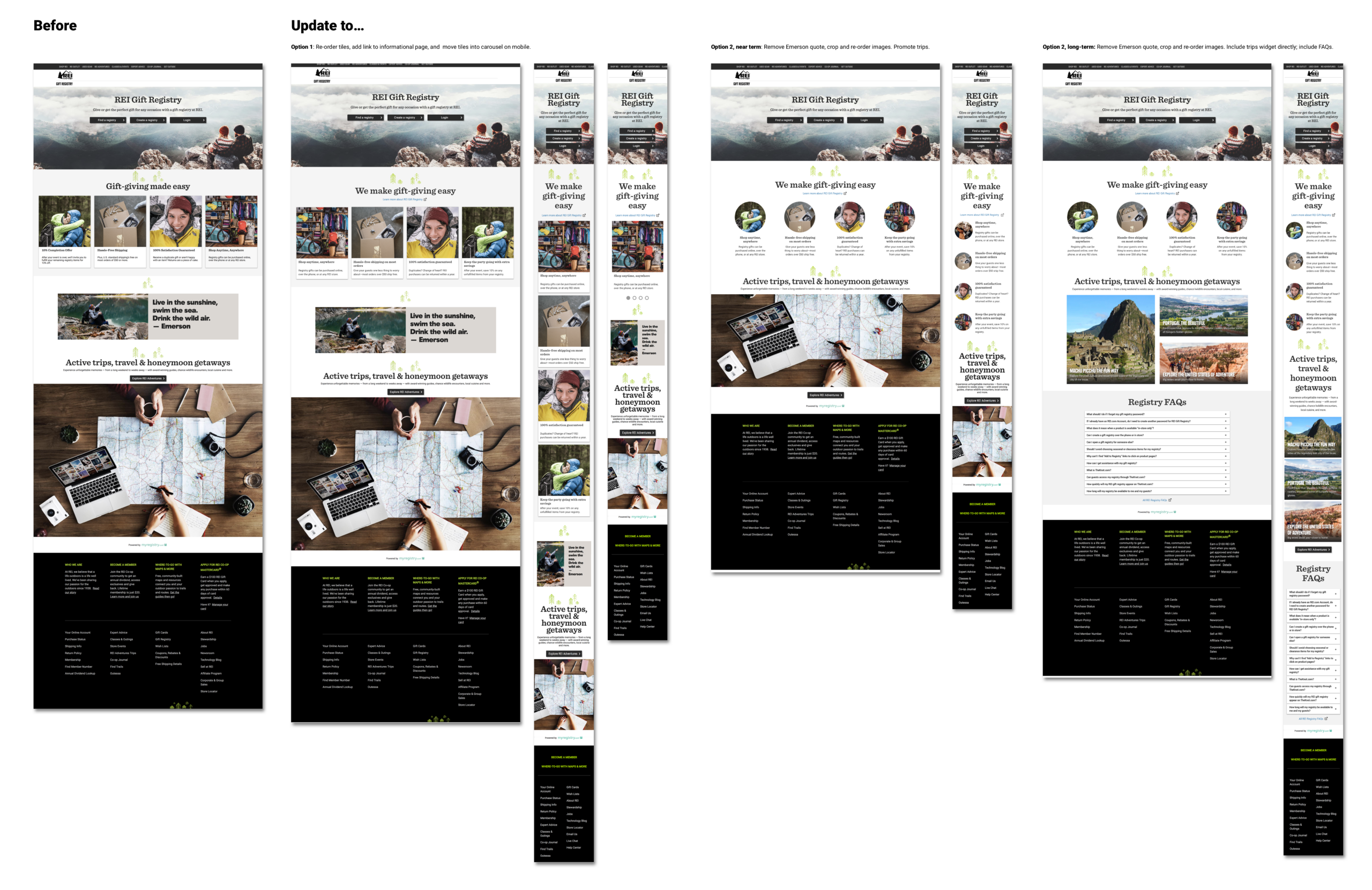
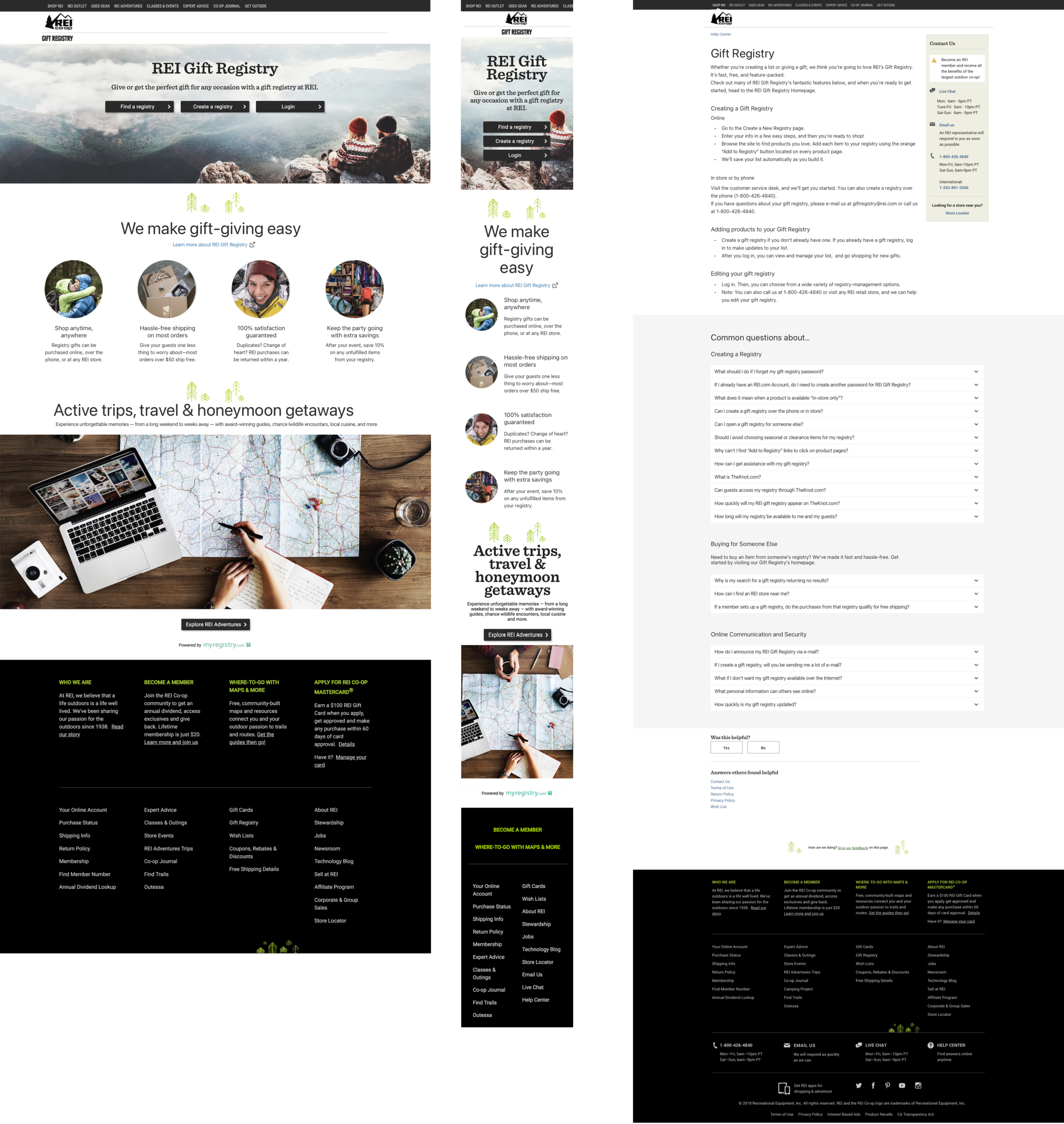
My heuristic analysis surfaced the core problems: visual inconsistency with Cedar and rei.com, poor mobile usability beyond basic responsive layout, and value propositions that buried the most compelling features.
When this work was brought to me, I was also managing two design teams. I was able to coordinate, flex, and cover work more quickly. Under my guidance, one member of the team handled the registry onboarding. Another shared the latest on the system, tokens, and connected me with the right members of engineering.
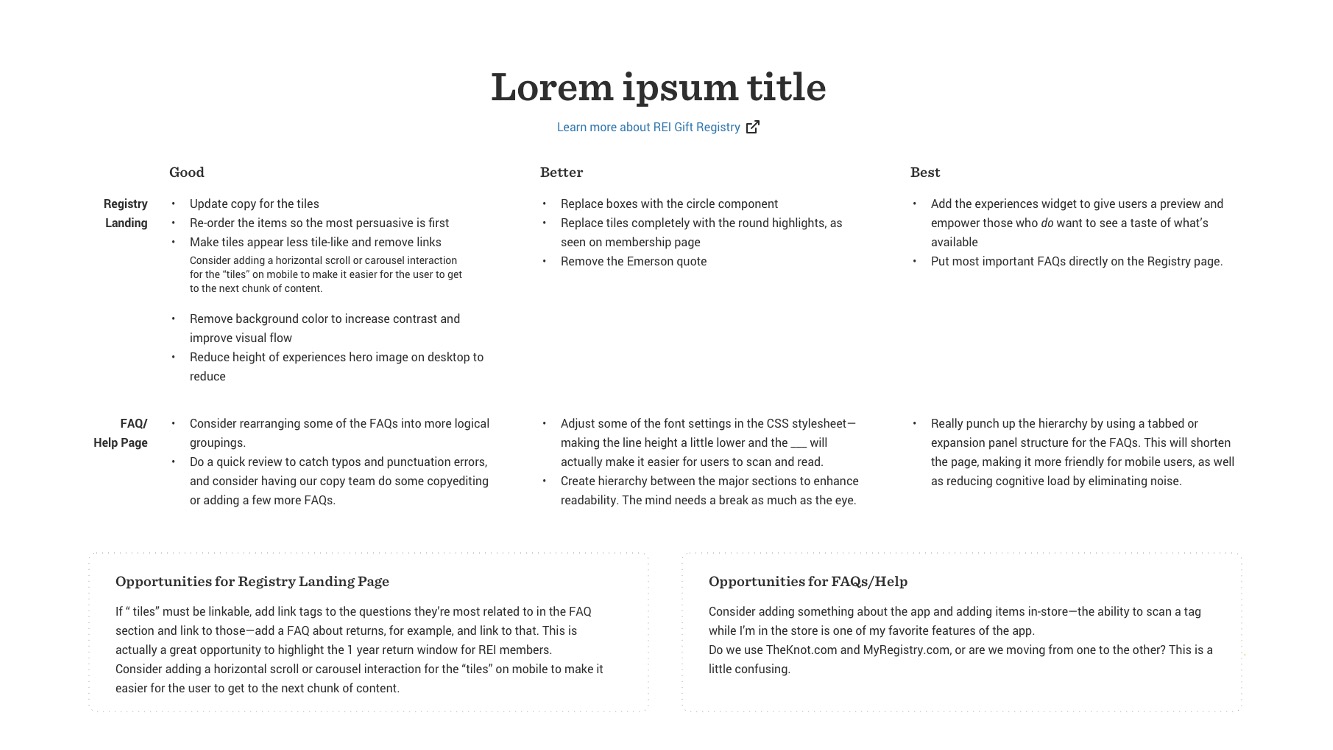
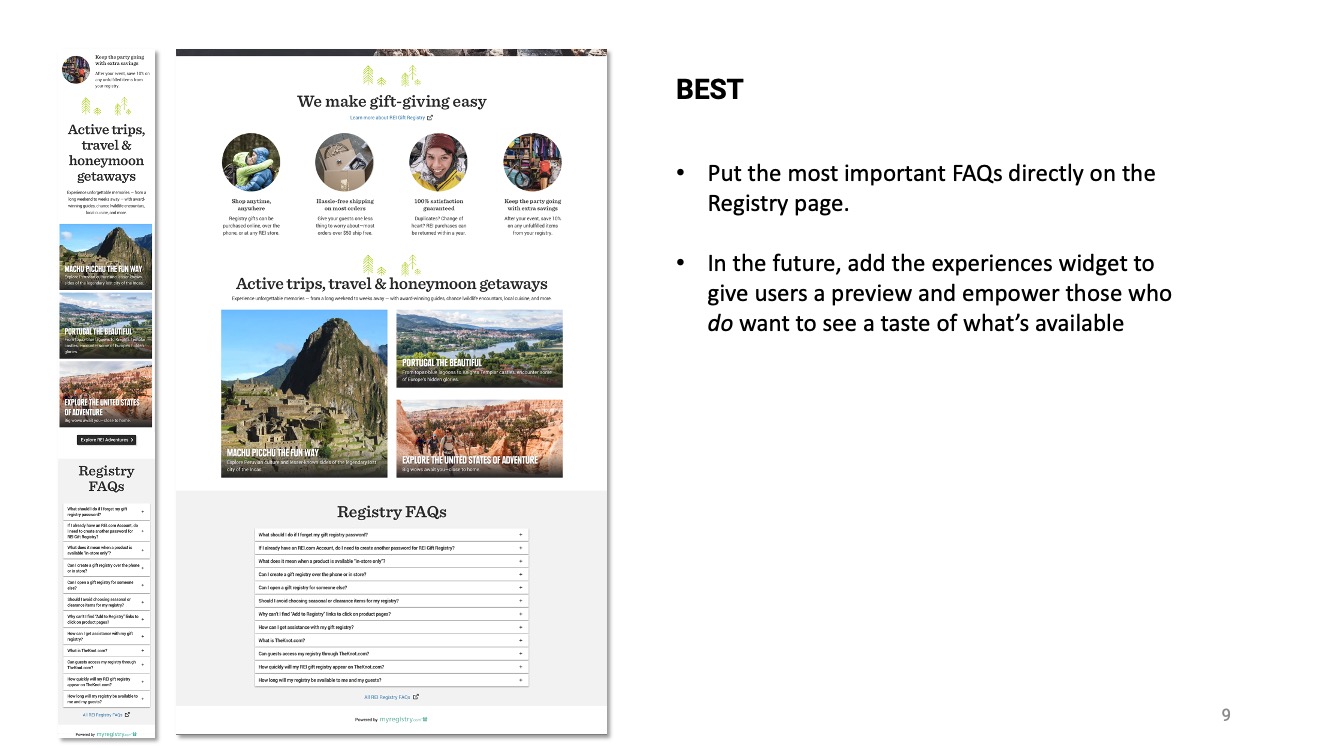
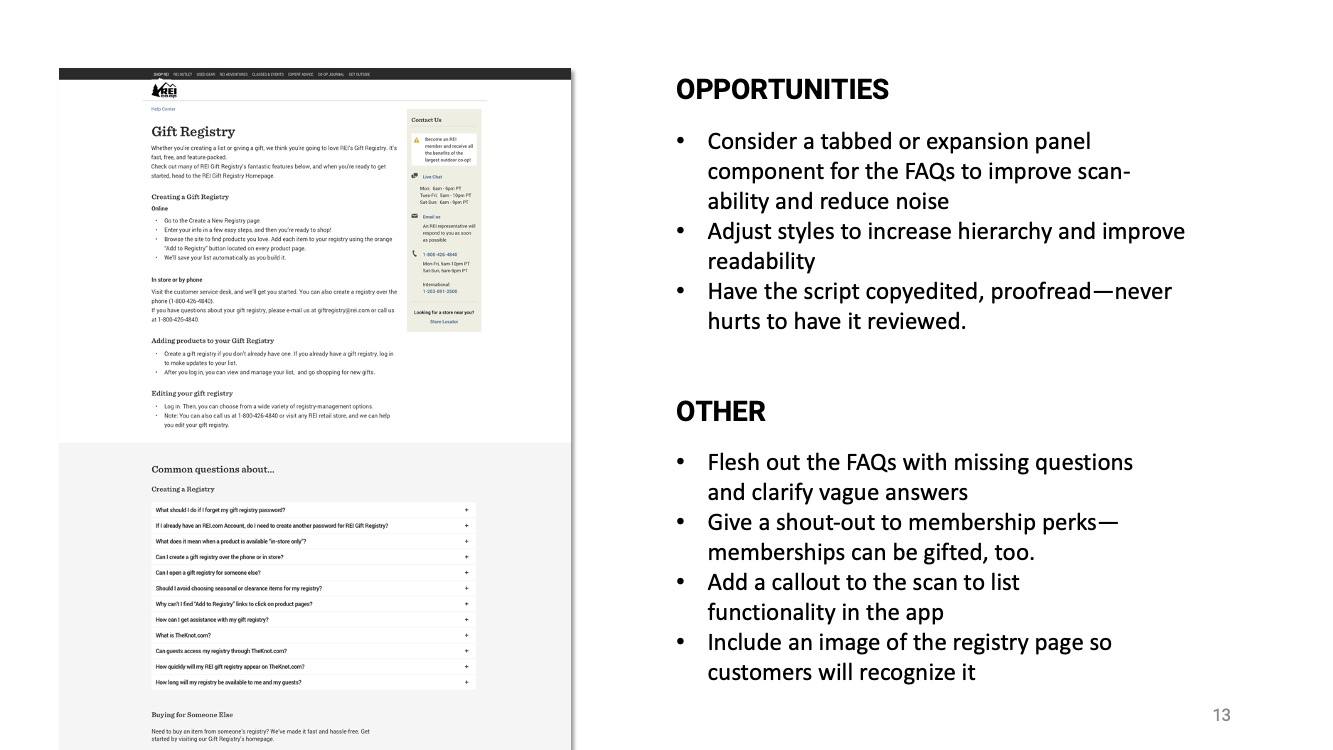
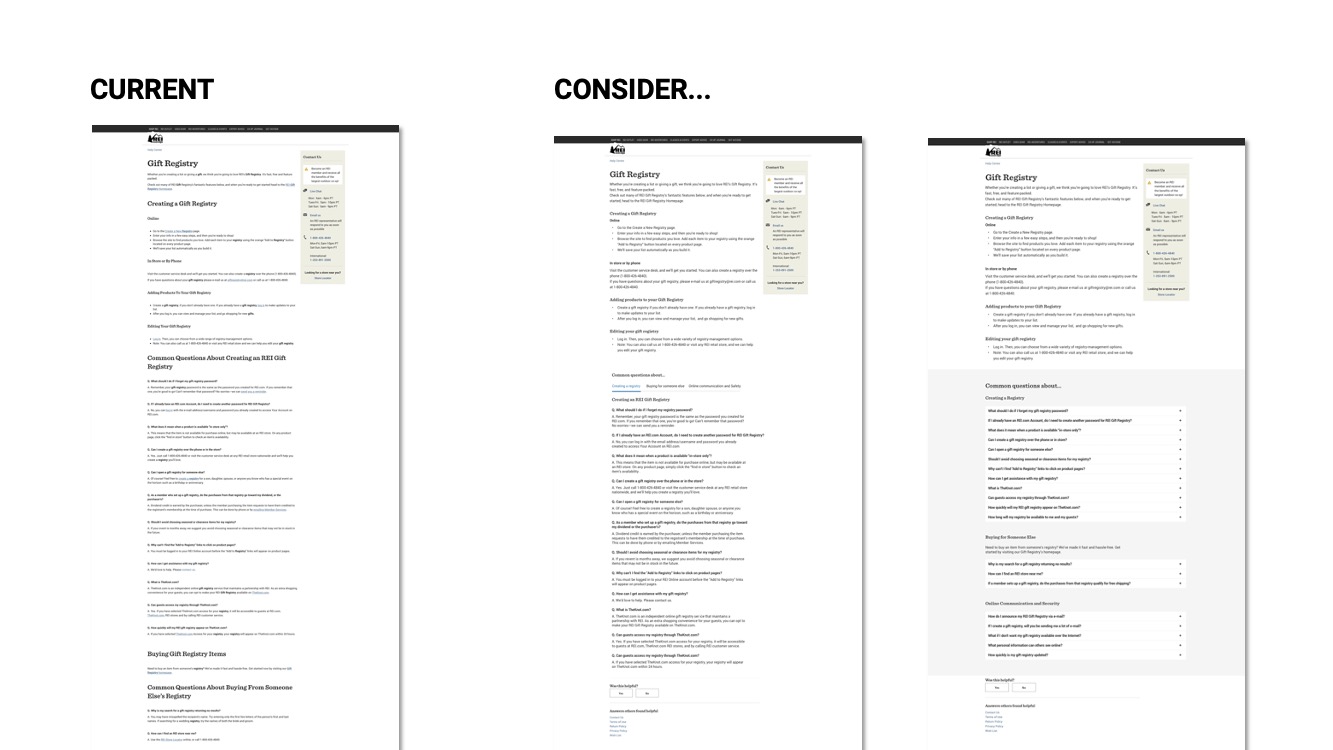
The shipped work brought the experience into Cedar compliance and improved mobile usability. The strategic document made sure nothing was wasted. The FAQ and Help improvements that ran out of budget were documented by the team and ready for whoever picked them up next.
I set up two explicit workstreams from the start and communicated that framing clearly. Stakeholders understood what was shipping and what was being preserved for the future. Together we made the constraint feel like strategy rather than failure.
The full scope of the FAQ and Help improvements were designed and documented but ran out of budget before implementation. I wasn't willing to let that work disappear. I pushed to document it with rationale, so the next team to touch the experience had a ready-made starting point.
Deliverables
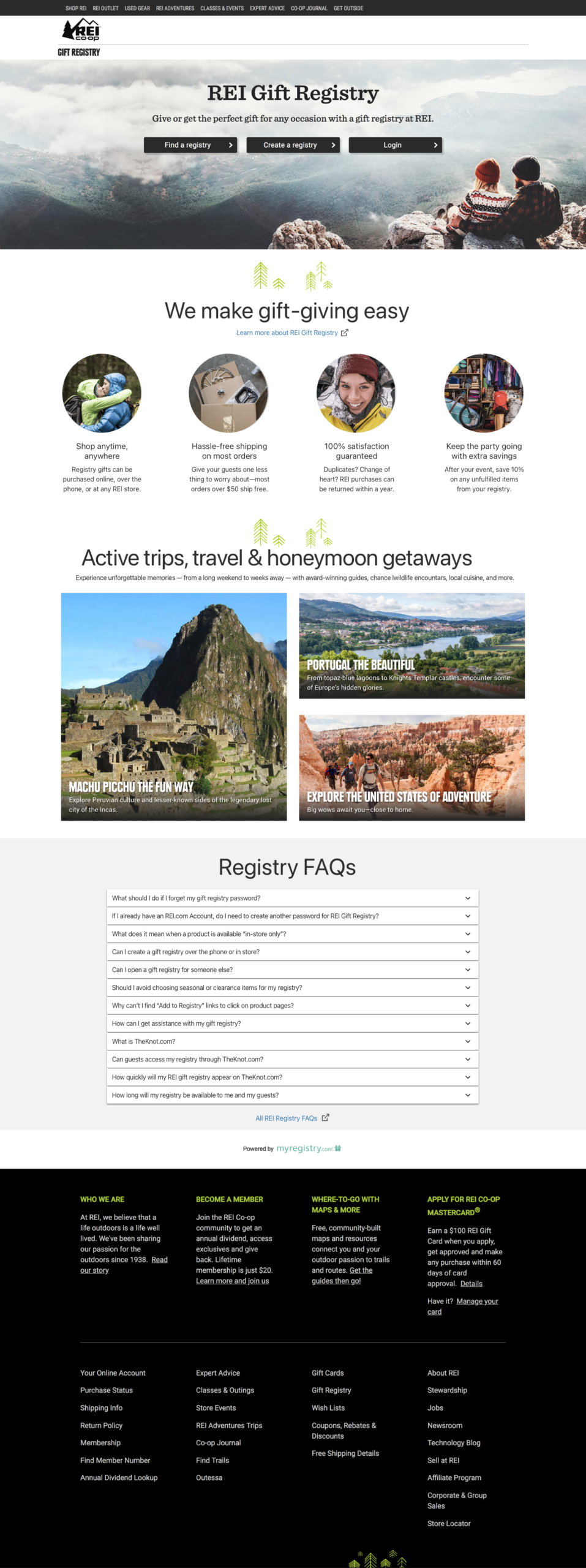
- Cedar-compliant UI updates across the landing screen and associated pages
- Mobile experience improvements: touch target sizing, typography scale, and interaction patterns beyond responsive layout
- Value proposition reordering to lead with the most compelling features.






Results & Impact
The strategic layer was grounded in real behavioral shifts. Millennials were registering for experiences over things and living in smaller spaces. REI’s growing experiences offerings positioned the Co-op uniquely to own that category if the product vision followed.
Cedar-compliant
Registry brought into alignment with REI design system and rei.com
Mobile-first
Touch targets, typography, and interaction patterns improved beyond responsive
Future vision
Strategic roadmap documented for experiences registry and group gifting, ready to use when bandwidth allows
Nothing wasted
FAQ/Help improvements designed and documented for future implementation